Liuwa Plain · Species & Timing
Africa's Second-Largest Migration
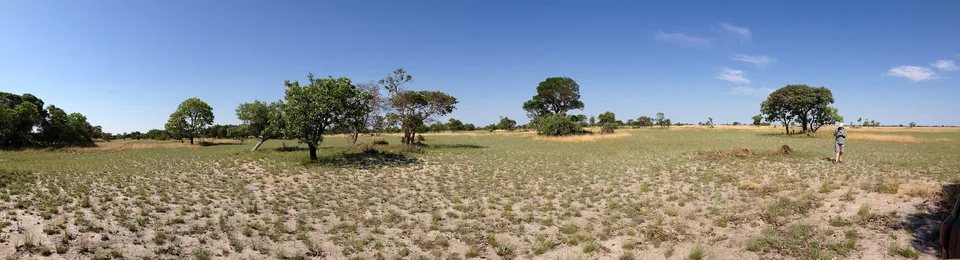
The plain runs to the horizon with nothing in the way — the ground the herds cross once the rains arrive.
The numbers
Liuwa Plain hosts Africa's second-largest wildebeest migration by animal count — an aerial survey recorded roughly 45,000 blue wildebeest, recovered from about 15,000 in 2004 after African Parks and the Barotse Royal Establishment began co-managing the park in 2003. The park spans about 3,660 km² of open floodplain in Zambia's Western Province.
When it happens (indicative, as of 2026-09-23)
The herds typically begin moving with the first rains around October, peak in November–December, and linger into January before dispersing. Crucially, this is a green/wet-season spectacle — the opposite of the standard "go in the dry season" safari logic that applies to most of the region. Apply that logic to Liuwa and you miss the headline event.
Liuwa vs the Serengeti
| Attribute | Liuwa Plain | Serengeti–Mara |
|---|---|---|
| Country | Zambia (Western Province) | Tanzania / Kenya |
| Wildebeest | ~45,000 (2nd-largest) | ~1.5 million (largest) |
| Visitors | Very few (hundreds/year) | Very many |
| Peak season | Nov–Jan (wet/green) | Varies by leg (year-round movement) |
| Lodge | King Lewanika (only permanent luxury lodge) | Many |
Why it matters for planning
Liuwa is one of the few places where you can see a migration-scale spectacle in near-total solitude. The trade-off is remoteness: access is by private charter to Kalabo airstrip, and the season runs counter to the regional norm. See the main Liuwa Plain guide for access, indicative pricing, and referral enquiries.
Frequently Asked Questions
How many wildebeest are in the Liuwa migration?
An aerial survey recorded roughly 45,000 blue wildebeest — up from about 15,000 in 2004 after African Parks took over management in 2003. It is Africa’s second-largest wildebeest migration by animal numbers.
When is the Liuwa migration at its peak?
The herds typically begin moving with the first rains around October, peak in November–December, and remain on the plains into January before dispersing. This is a wet/green-season event — unlike the classic dry-season safari window elsewhere in the region. (Indicative, as of 2026-09-23; confirm with the operator.)
How does Liuwa compare to the Serengeti migration?
The Serengeti–Mara migration is larger in absolute numbers and far better known. Liuwa’s is the second-largest by animal count, but it is seen by a tiny fraction of visitors — often described as the same spectacle without the convoys of vehicles. Liuwa is also a different country (Zambia) and ecosystem from the Serengeti (Tanzania/Kenya).
Seeing it for yourself
The migration is a green-season event, so a trip has to be built around it — most camps are shut or empty during the months the herds are on the move. The park's tourism office and the lodge are the two channels that can actually place you there.
Visit Liuwa Plain
Liuwa Plain National Park
The park’s official visitor site — Liuwa Camp, the community campsites, guided game drives, self-drive permits and the Kuomboka Festival experience. Reservations go to the park’s tourism office.
Time + Tide King Lewanika Lodge
Liuwa Plain National Park
The only permanent lodge inside Liuwa — six open-front villas on the Munde Stream, reached by a 15-minute helicopter transfer from Kalabo. Typically open mid-October to mid-July; minimum age 5.
African Parks — Liuwa Plain
Liuwa Plain National Park
The park manager, in partnership with Zambia’s DNPW and the Barotse Royal Establishment since 2003. The authoritative source on the migration, the lion reintroduction and park access.
Barotse is an independent guide. We are not a tour operator and we do not sell these trips — booking is direct with the operator. Nothing on this page is a paid placement, and none of these operators has any say over what this guide says. Links last checked 2026-09-23.