Species Guide · Barotseland
The Tiger Fish of the Upper Zambezi
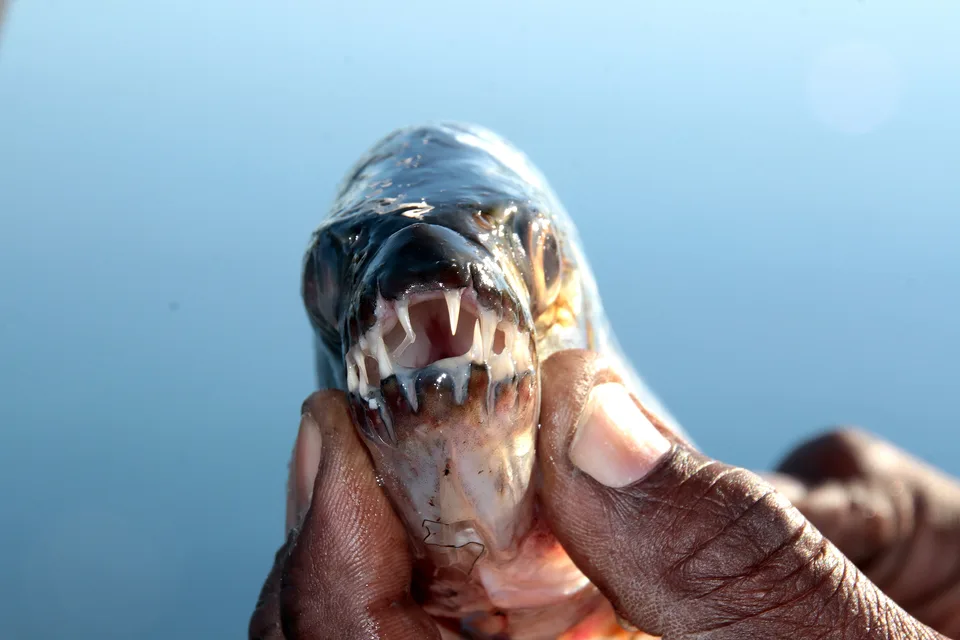
Hydrocynus vittatus — the striped predator of the Barotse river. (Photographed on the Okavango; same species.)
The species
The tiger fish of the Upper Zambezi is Hydrocynus vittatus — a powerful, stripe-marked, highly predatory fish and one of Africa's most sought-after sport fish. It is known for explosive strikes, dagger-like teeth, and the low-traffic, wild river stretches of Barotseland that favour both catch rates and solitude.
Clearing up the confusion (L3)
- Not piranha. Piranha is South American and absent from Africa. The tiger fish is the African analogue — similar teeth and aggression, different continent and species.
- Not the goliath. The giant goliath tigerfish (Hydrocynus goliath), often cited at ~50–70 kg, is native to the Congo Basin, not the Zambezi. The Zambezi's tiger fish is a smaller, distinct species. Crediting the Zambezi with the goliath record is wrong.
- "Africa's piranha" is a nickname. It describes temperament, not taxonomy.
Tiger fish vs piranha — the quick comparison
| Attribute | Tiger fish (Hydrocynus) | Piranha |
|---|---|---|
| Continent | Africa (incl. Zambezi) | South America |
| In the Zambezi? | Yes (H. vittatus) | No |
| Famous record size | Goliath (H. goliath) ~50–70 kg — but that is the Congo, not the Zambezi | Much smaller |
| Role here | Sport-fishing target | Not present |
When to fish (indicative, as of 2026-09-23)
Most Barotse camps operate roughly May–November and pause or slow over the rainy season (December–April), when high water changes the river. Peak windows vary by camp; confirm current open dates with the operator. Treat any specific month as indicative, not guaranteed.
How it's fished
Both fly and lure anglers target tiger fish here, guided by locals who read the river's seasonal shifts. Expect low-traffic stretches, canoeing through reed-beds, and rich birdlife between sessions. See the Upper Zambezi guide for access, indicative camp pricing, and referral enquiries.
Frequently Asked Questions
What species of tiger fish is caught on the Upper Zambezi?
The tiger fish of the Upper Zambezi is Hydrocynus vittatus — a powerful, stripe-marked predator and a prized sport fish. It is African, and is the local analogue of the South American piranha (which does not occur in Africa), but the two are not the same animal.
Is the record goliath tigerfish from the Zambezi?
No. The giant goliath tigerfish (Hydrocynus goliath), cited at up to ~50–70 kg, is native to the Congo Basin (Congo River, Lualaba, Lake Upemba, Lake Tanganyika). The Zambezi’s tiger fish is a different, smaller species. Claims that the Zambezi holds the goliath record are inaccurate.
When is the best time to tiger fish on the Upper Zambezi?
Most Barotse camps operate roughly May–November and close or slow over the rainy season (December–April) when water levels are high. Peak fishing windows vary by camp — confirm current open dates with the operator (as of 2026-09-23).
Do I need to be an expert angler?
Both fly and lure anglers fish these waters. Local guides know the river’s seasonal shifts and tiger-fish behaviour; beginners are typically accommodated, but confirm skill expectations with the camp.
Where this species is actually fished
Hydrocynus vittatus is a river fish, so it is fished from camps on the river rather than on a day trip. These are operators on the Upper Zambezi reaches in Zambia.
Lumbe Pools Camp
Upper Zambezi, Western Zambia
A small camp (five chalets, ten guests) on a private stretch of the Upper Zambezi, running 5–7 night tiger-fishing trips. Fishing is March to early January; drift boats and motor boats.
Shackletons Tiger Fishing Lodge
Upper Zambezi floodplain, Zambia
A long-established lodge in the floodplain reach of the Upper Zambezi with fishing access to roughly 130 km of river. Guided fly, spin, lure and drift-bait angling from 12–26 ft boats.
Tiger Fishing Zambezi
Zambezi River (multi-country)
A specialist operator that matches anglers to lodges along the Zambezi, including the Upper Zambezi reaches in Zambia. Useful when you want a package rather than a single camp.
Barotse is an independent guide. We are not a tour operator and we do not sell these trips — booking is direct with the operator. Nothing on this page is a paid placement, and none of these operators has any say over what this guide says. Links last checked 2026-09-23.